Trailers Types
Picking the right shipping method and equipment can be tough, even for pros. Knowing the main trailer types and their features helps choose the best way to move freight. There are many trailers, each made for different shipping needs. To learn more about the top and most common trailer types, check out our ultimate guide:
Dry Van Trailers
Dry vans are enclosed trailers without temperature control. They carry the most cargo worldwide. These trailers have rear doors for loading, and most have wooden floors to secure loads.
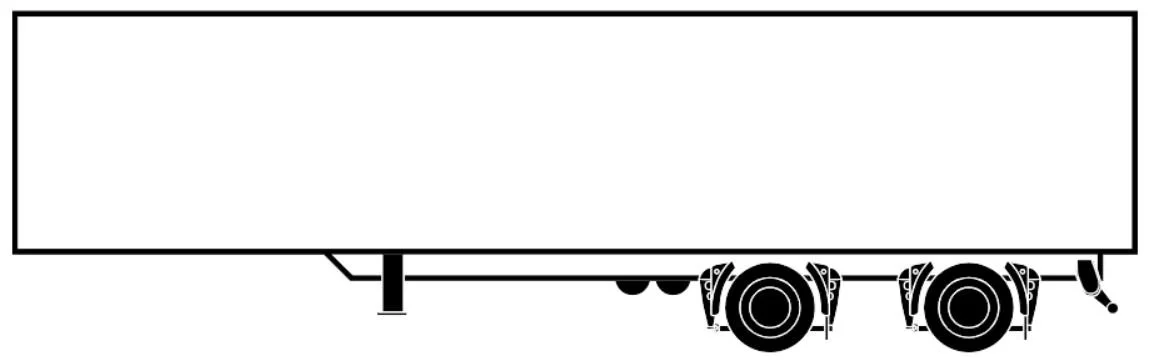
Dry Van Trailers Dimensions:
A dry van trailer is usually 53 feet long but can sometimes be 48 feet.
● Shippers can only load and unload them from the back using a forklift.
● Dock required for loading and unloading.
● The deck van is 4 ft. tall from the ground.
● The maximum haul weight is 45,000lbs, but dry van carriers prefer to limit the weight to 43,000lbs.
Refrigerated Trailers
Refrigerated or reefer trailers have refrigeration units capable of setting to the same temperature range. Food, beverages, flowers, or fine art are the most common commodities shipped with reefers. Refrigerated trailers have corrugated metal floors, so loads cannot be nailed to the floors. Moving freight with a refrigerated truck is not an option if the load requires blocking and bracing.
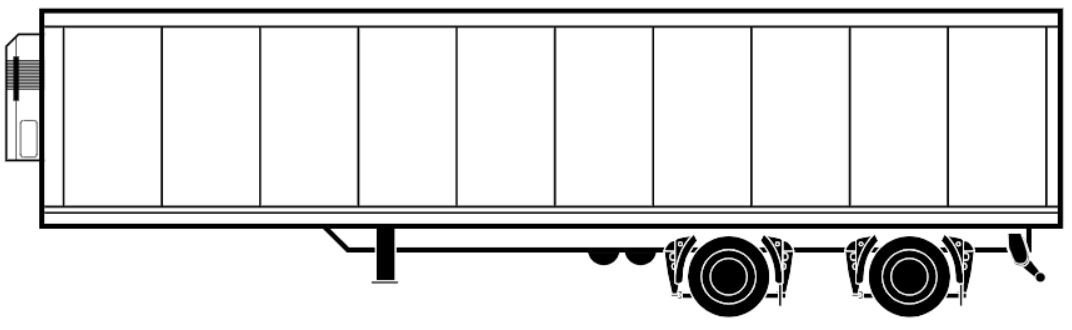
Refrigerated Trailers Dimensions
Usually, a refrigerated trailer is 53ft in length, but in some cases, it can be 48ft.
● Can only be loaded and unloaded from the rear with a forklift
● Dock required for loading and unloading
● The deck van height is 4 ft. from the ground
● Maximum haul weight is 43,000lbs, but dry van carriers prefer to stick around up to 40,000
Flatbed Trailers
The flatbed trailer is an open deck equipment with no sides and no roof, mainly used for transporting industrial commodities. These trailers are versatile, making them a common asset for carriers. It is a basic trailer with no sides or roof, providing quick and easy loading and unloading. Typical uses include heavy loads that are not perishable, delicate, or vulnerable to precipitation – since there is no cover to protect the freight. Open deck equipment is the most flexible with loading/unloading. Most commonly used for moving industrial commodities (e.g., steel coils, plates, etc.). In practice, shippers often use ‘flatbed’ as a general term for a few different types of open deck equipment.

Flatbed Trailers Dimensions
Usually, a flatbed trailer is 48-53 ft. in length
Shippers can load them from any direction (overhead crane, forklift side, forklift rear)
The standard dock height is 4 ft. off the ground
Loads often require tarps
Step Deck Trailers
Step Deck trailer, or Drop Deck trailer, is an open type of trailer with two deck levels: an upper deck and a lower deck that drops down after clearing the tractor unit. Generally, step deck trailers can haul taller loads than Flatbed trailers and often have ramps for unloading. They are also safer for forklift pickup since they are closer to the ground. Shippers can lower the main deck of a step deck to adjust the center of gravity and allow them to haul the higher material.

Double Drop Trailers Dimensions:
● Usually 28-29 ft on the main deck
● The main deck in the middle is called the ‘well’
● Loaded only from the top or side, not the rear
● Best for oversized freight over 10 ft
Hotshot trailers
Hotshot is a trucking term for quickly moving a load over a short distance. Shippers often use hotshots to deliver cargo to one customer in remote or hard-to-reach places.
Characteristics:
● Pick-up trucks with 20-40 trailers that can carry up to 18,000lbs of material
● Used for hauling smaller/partial loads
● Often used to deliver freight to the hard-to-access areas/job site (in the mountains; sharp turns that won’t allow a regular truck to pass, etc.)
● Typically look like flatbeds/step deck
Less-than-Truckload (LTL) Trucking
Less-than-truckload (LTL) shipping is a way to transport freight that doesn't fill a whole truck. Shippers share truck space with others, making it ideal for shipments under 15,000 pounds. Since the freight is loaded and unloaded several times during the trip, there's a higher chance of damage. However, LTL helps save shipping costs and offers more flexibility.
Characteristics:
● Shippers should palletize, bundle, or crate their LTL loads to handle them with a forklift
● You can only transport LTL shipments in van trailers
● LTL shipment weight ranges from 151 to 20,00lbs
● Carriers can transfer LTL freight to different trucks several times between the origin & destination
● If a shipment you are about is more than 6 pallets or over 6,000lbs, it might be eligible for a volume quote. Volume quotes are usually cheaper than regular LTL rates.
Oversized & Hazmat Loads
Oversized freight is cargo that is heavier or bigger than normal limits. In most states, it must be one whole piece that can't be split into smaller loads to get special permits. All oversized loads need permits. Hazmat means hazardous freight, which involves carrying dangerous items that need extra care and safety rules.
Hazmat Load Dimensions
Legal vehicle height: 13 ft. 6 in
Maximum legal weight for a hazmat load: 80,000 lbs.
Maximum height for vehicle plus cargo: 102 inches